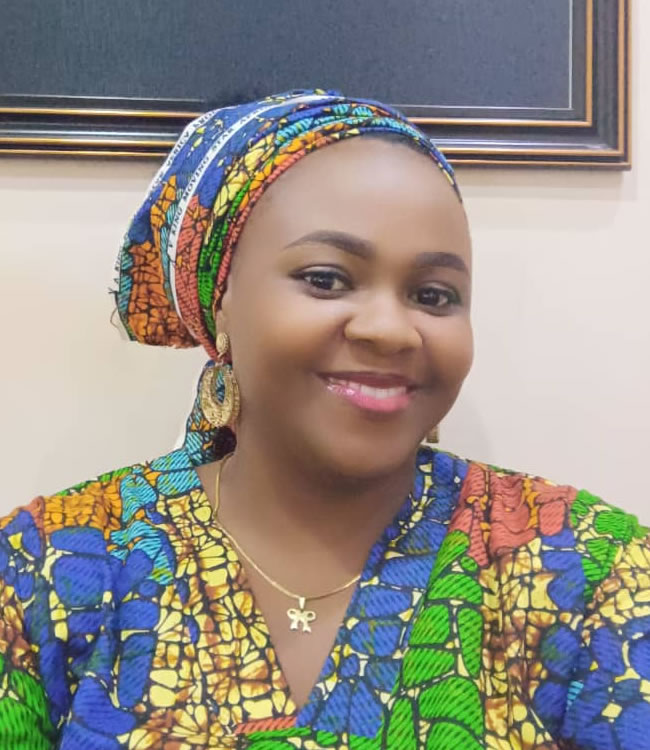
Ambassador Amaka Nweke, Executive Director and founder of WOSCONET, represented Nigerian civil society at a regional conference on women's rights and gender equality held in February 2025, bringing WOSCONET's community-rooted model of women's empowerment to an international audience for the first time. The conference, which convened women's rights leaders, policymakers, UN agency representatives, and development finance institutions from across West and Central Africa, provided a platform for sharing promising practices, identifying cross-border challenges, and advancing a coordinated regional advocacy agenda on women's inclusion, gender-based violence, and women's economic participation.
Ambassador Nweke delivered a plenary address on Day 2 of the conference, presenting WOSCONET's integrated approach to women's empowerment — one that links grassroots community mobilisation with structural policy advocacy and individual capacity building. She spoke candidly about the realities facing women in Enugu State and Southeast Nigeria more broadly, including the persistence of discriminatory inheritance practices that strip widows of land and property, the under-representation of women in state and local government, and the particular vulnerability of rural women to gender-based violence in contexts of economic stress. Her address drew on WOSCONET's documented programme experience across health, WASH, governance, economic empowerment, and disability inclusion to illustrate how civil society organisations can achieve systemic impact without large institutional budgets.
"Nigeria's women are not waiting to be included — they are leading, innovating, and demanding the seats that are rightfully theirs."
On the sidelines of the conference, Ambassador Nweke held bilateral meetings with representatives of women's civil society networks from Ghana, Cameroon, and Côte d'Ivoire, identifying areas of shared programming interest and exploring the possibility of a regional peer-learning exchange programme. She also met with representatives of two international foundations to discuss potential multi-year funding for WOSCONET's governance and economic empowerment programmes, with promising follow-up discussions initiated upon her return to Nigeria. The meetings reinforced WOSCONET's growing reputation as a credible, results-oriented civil society partner capable of engaging meaningfully with international development actors.
Ambassador Nweke also participated in a technical working group session on the implementation of the Maputo Protocol — the African Union's landmark instrument on women's rights — with a specific focus on the protocol's provisions on women's political participation, reproductive health rights, and protection from violence. She contributed WOSCONET's experience navigating Nigeria's legal framework in relation to these provisions and joined other participants in drafting a set of recommendations to African Union member states on accelerating Maputo Protocol domestication and reporting. These recommendations were formally adopted as part of the conference's closing communiqué.
Reflecting on the experience after her return, Ambassador Nweke stated that the conference reinforced her conviction that the solutions to Africa's gender equality challenges lie within African communities themselves — in the knowledge, resilience, and organising power of women who have refused to wait for permission to lead. WOSCONET is now developing a South-South learning programme to facilitate structured exchanges between its community champions in Enugu and women's leadership networks in other Nigerian states and neighbouring West African countries, building the regional architecture for a stronger, more connected women's rights movement.