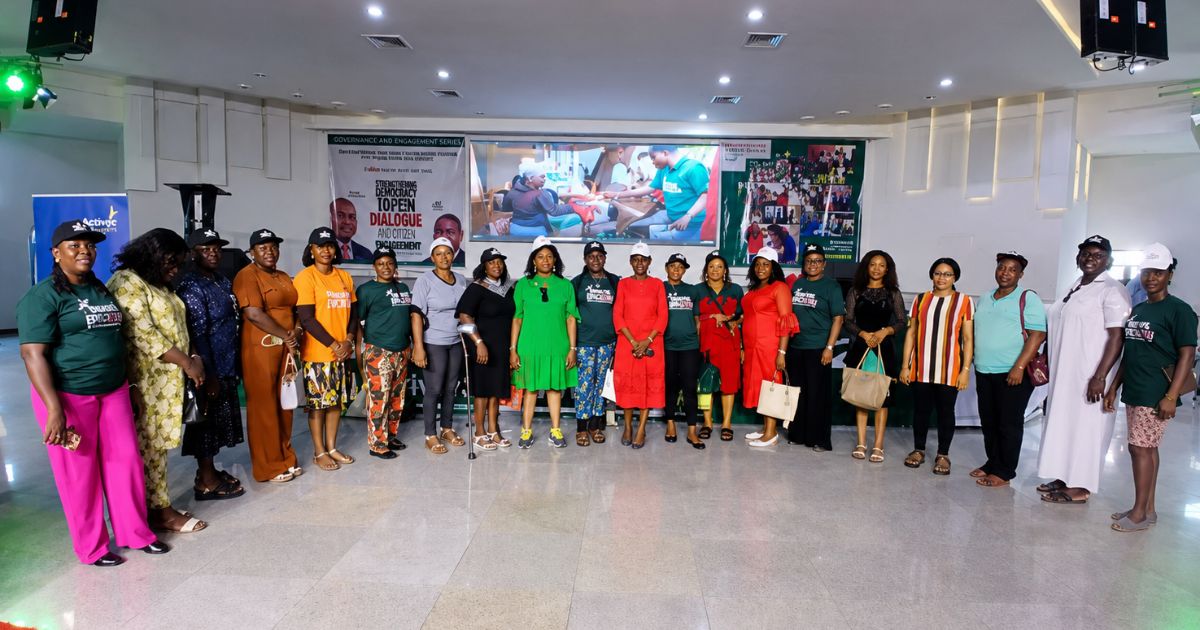
Representatives from Women Support Women Community Network (WOSCONET) participated in a landmark two-day workshop held in Enugu State focused on accelerating the Open Defecation Free (ODF) roadmap across the state. The workshop, convened by the Enugu State Ministry of Water Resources and Sanitation in collaboration with UNICEF Nigeria, brought together civil society organisations, local government officials, community leaders, and development partners to align strategies, set measurable targets, and assign clear responsibilities toward achieving ODF status in all 17 local government areas.
WOSCONET's delegation, led by programme officers from its WASH advocacy unit, contributed community-level insights drawn from the organisation's ongoing fieldwork in rural and peri-urban Enugu communities. The team presented data on open defecation hotspots, the specific barriers faced by women and girls in accessing safe sanitation, and documented testimonies from community members on how lack of proper toilet facilities directly affects women's safety, dignity, and health outcomes. Their contribution helped shape the workshop's final communiqué, which prioritised gender-responsive sanitation planning as a core component of the ODF roadmap.
"Clean water and safe sanitation are not privileges — they are the foundation of every woman's dignity."
The two-day sessions featured technical presentations on behaviour change communication (BCC) strategies, community-led total sanitation (CLTS) approaches, and financing models for rural latrine construction. Participants formed working groups by LGA cluster to develop localised action plans, with WOSCONET playing an active role in the Enugu East and Enugu North cluster groups. By the close of the second day, concrete commitments had been secured from local government chairpersons in five LGAs to allocate dedicated budget lines for sanitation infrastructure in their 2026/2027 fiscal planning cycles.
WOSCONET's Executive Director, Ambassador Amaka Nweke, emphasised that achieving ODF status in Enugu State requires more than infrastructure — it demands sustained community education, women's leadership at the household and community levels, and accountability mechanisms that ensure local governments follow through on their commitments. The organisation pledged to continue monitoring implementation on the ground and to mobilise community women as sanitation champions in their respective wards, serving as the last-mile link between government policy and household practice.
The workshop concluded with the signing of a joint communiqué committing all stakeholders to quarterly review meetings, a shared ODF monitoring dashboard, and a target of at least six LGAs attaining verified ODF status by the end of 2026. WOSCONET will serve as a civil society observer and community feedback channel within this accountability framework, ensuring the voices of women and girls remain central to Enugu State's sanitation transformation journey.