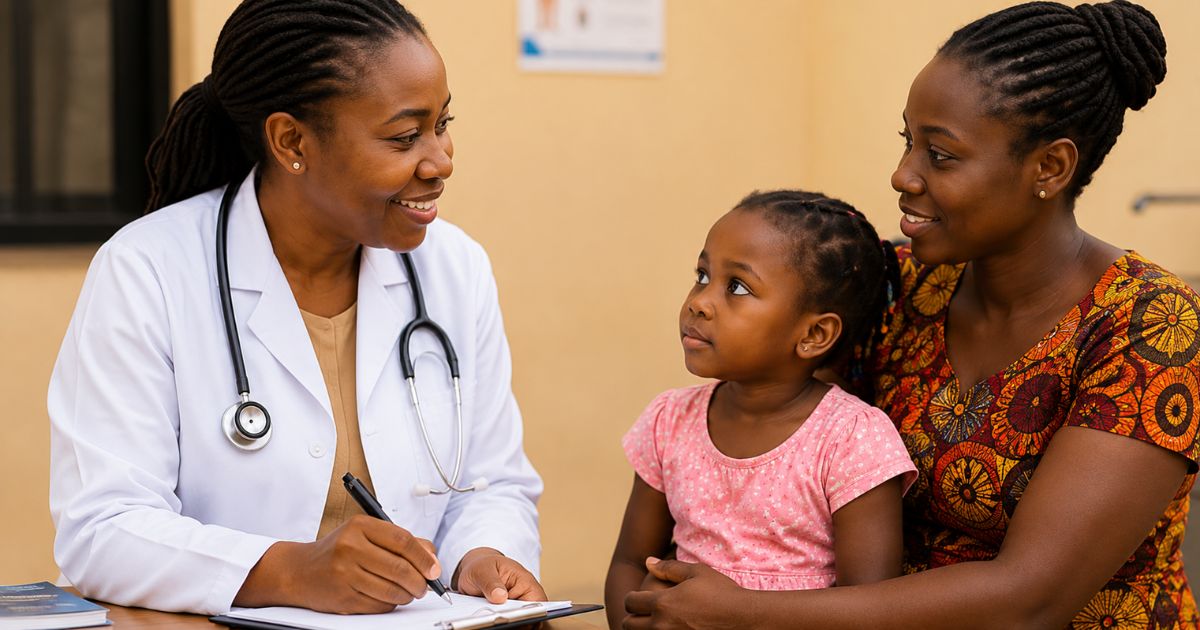
WOSCONET deployed a mobile medical outreach team to three rural communities in Enugu State during May 2025, providing free healthcare services to over 400 women, girls, and members of their households who would otherwise lack access to basic medical attention. The outreach, conducted across Awgu, Oji River, and Nkanu East LGAs over a span of five days, included general health consultations, blood pressure and blood sugar screening, malaria rapid diagnostic tests, cervical cancer awareness and visual inspection with acetic acid (VIA) screening, prenatal check-ups, and the distribution of essential medications including antimalarials, analgesics, and iron supplements.
The mobile clinic was staffed by a volunteer team of doctors, nurses, midwives, and community health extension workers, supported by WOSCONET's programme staff and trained community health volunteers drawn from each host community. Prior to each outreach day, WOSCONET's community mobilisers worked with village heads, women's group leaders, and church and mosque leaders to announce the outreach, dispel any rumours, and encourage women to come forward — including for the VIA cervical cancer screening, which is often surrounded by silence and fear in rural communities. As a result of sustained pre-outreach engagement, uptake of VIA screening was higher than anticipated, with over 90 women screened across the three sites.
"Healthcare should not be a luxury. Every woman in Nigeria deserves access to quality medical care, regardless of where she lives."
Several cases requiring urgent follow-up care were identified during the outreach, including two women with suspected hypertensive emergencies, one case of suspected cervical abnormality requiring colposcopy, and multiple cases of severe anaemia in pregnant women. WOSCONET's team coordinated directly with the Enugu State Hospital Management Board to arrange referral pathways for these individuals, and organisation volunteers followed up by phone to ensure the women reached the facilities they had been referred to and received the care they needed. This referral linkage function — often absent in one-off outreach programmes — is a defining feature of WOSCONET's community health model.
Beyond clinical services, each outreach day included a health education session facilitated in Igbo by WOSCONET's health advocates. Topics covered included nutrition during pregnancy and lactation, the importance of antenatal and postnatal care, family planning options, recognition of danger signs in pregnancy, and prevention of malaria using insecticide-treated nets. Participants received printed health information cards in plain Igbo, designed by WOSCONET in consultation with community literacy workers to ensure accessibility for women with low formal education levels.
WOSCONET is currently in discussions with the Enugu State Primary Health Care Development Agency to establish a formal partnership under which the organisation's community health volunteers would be integrated into the ward-level primary healthcare system as a complementary last-mile service layer. This model would allow WOSCONET's volunteer network to serve as a bridge between households and the formal health system throughout the year, rather than only during periodic outreach events, dramatically extending the impact of each community engagement.